Respecting Torque Specifications: Why Every Bolt Matters
Maintenance
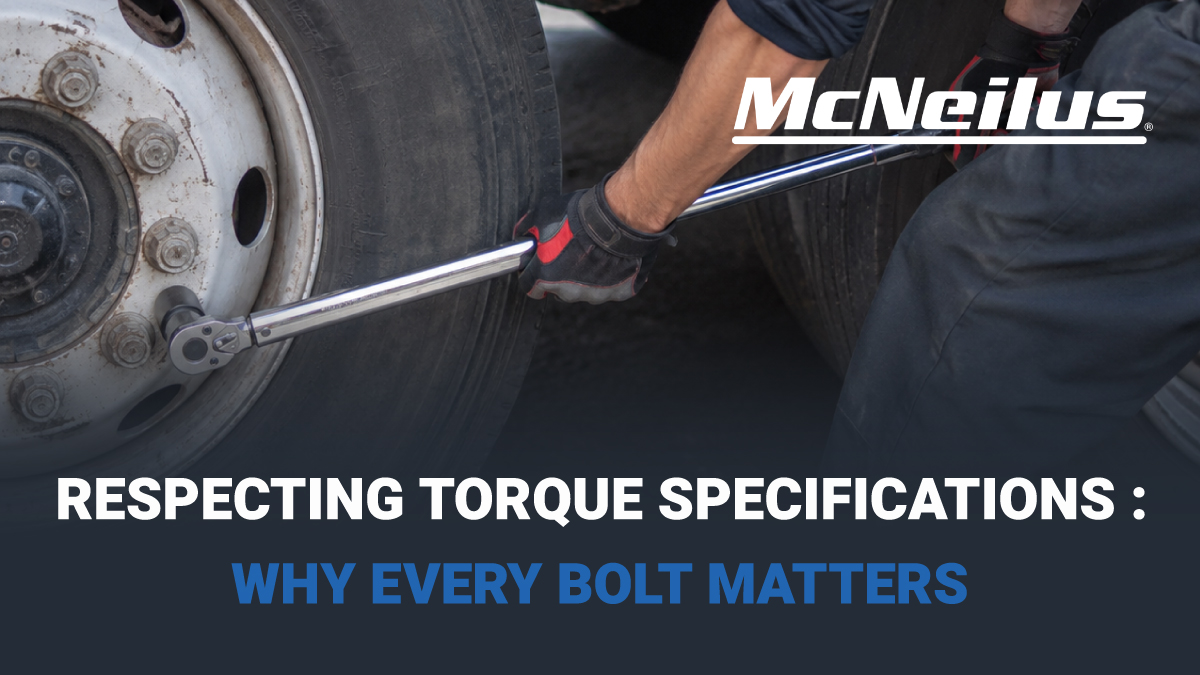
When servicing a refuse collection truck, tightening a bolt, fitting, or flange may seem like a routine task. However, tightening a component more does not necessarily mean tightening it better.
Each assembly has specific characteristics that determine the torque to be applied. Insufficient torque can compromise the stability or sealing of a component, while excessive torque can cause deformation or damage.
Following the values and procedures specified by the manufacturer is therefore an essential part of proper maintenance.
Why Do Torque Specifications Vary?
Torque refers to the rotational force applied to a fastener. Its purpose is to secure an assembly properly without exceeding the limits established for its components.
However, there is no universal torque value that can be applied to every bolt or fitting on a truck.
In its maintenance manual, McNeilus specifies torque values that vary based on several factors, including:
- Thread diameter and pitch;
- Bolt grade or class;
- Type of fitting;
- Material;
- Surface coating or plating;
- Lubrication conditions.
Plain, plated, or lubricated fasteners may therefore require different torque values. The same applies to different types of hydraulic connections, including JIC fittings, O-ring fittings, and flanges.
An approximate value should never replace the specifications applicable to the component being serviced.
Overtightening or Undertightening: What Are the Risks?
Depending on the assembly, insufficient torque can contribute to movement between components, loosening of a fastener, or loss of sealing.
Conversely, applying more torque than specified does not necessarily provide an additional margin of safety.
McNeilus notes that overtightening certain hydraulic fittings can cause deformation or damage to the component to which they are connected.
Consider a hydraulic fitting that has been removed during maintenance. When reinstalling it, tightening it further in an effort to prevent leaks may seem like a reasonable precaution. However, if the applied torque exceeds the value specified for the fitting, the fitting can become damaged or deformed. Once the system is returned to service, the integrity of the connection may be compromised.
Proper tightening is therefore not about applying the maximum amount of force, but about following the specifications established for the assembly.
Proper Maintenance Goes Beyond Torque
The torque value itself is only one part of the procedure.
Before reassembly, the condition of the components must also be inspected. McNeilus procedures include checking surfaces for burrs, scratches, damage, or contaminants.
In hydraulic systems, the cleanliness of fittings and the condition of seals are also important. Components must be properly positioned and aligned before tightening.
When a specific torque value is required, McNeilus also specifies the use of a properly sized, calibrated torque wrench.
Some assemblies also require a specific tightening sequence. For example, on a four-bolt hydraulic flange, a cross-pattern sequence allows the load to be distributed progressively across the flange.
Torque, component condition, the tools used, and the installation method must therefore be considered as part of the same process.
Manufacturer Specifications Remain the Reference
Before performing any work, it is essential to correctly identify the fastener or fitting involved and consult the applicable technical documentation.
The diameter, thread, grade, material, and installation conditions can all affect the torque value and tightening procedure to be used.
On a refuse collection truck, where multiple mechanical and hydraulic systems operate under demanding conditions, this level of precision contributes to proper maintenance and the integrity of the assemblies.
When it comes to torque, proper maintenance means applying the correct value to the correct component using the correct procedure.
In Summary
- Torque must correspond to the specific component and assembly being serviced.
- Both insufficient and excessive torque can compromise the integrity of an assembly.
- Diameter, thread, grade, and installation conditions can affect the required torque.
- Component inspection and the use of appropriate tools are integral parts of the procedure.
- Manufacturer specifications should always remain the primary reference before performing any work.
Also read: Hydraulic System Maintenance
Following proper torque specifications is only one aspect to consider when maintaining a hydraulic system. Fluid quality, component condition, and regular inspections also contribute to the proper operation of the equipment.
→ HYDRAULIC SYSTEM MAINTENANCE: BEST PRACTICES TO MAXIMIZE PERFORMANCE
